Snoopy Thinks We Can Handle the Hard Stuff.
Updated: Sep 22
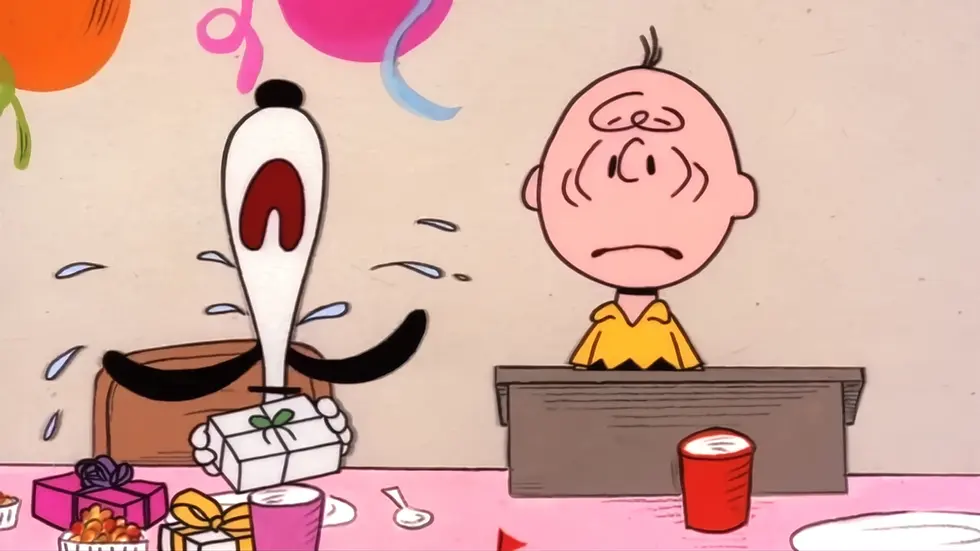
Something about Snoopy, Come Home popped into my head recently. If you’ve never seen it, Snoopy, Come Home is a 1972 animated Peanuts movie in which Snoopy receives a letter from Lila, his former owner, who is sick in the hospital. He goes to visit her and eventually faces the possibility of leaving Charlie Brown behind. This absolutely destroyed me as a kid.

I don't mean that I found it a little sad. I mean crying-my-eyes-out, genuinely devastated, wondering how a cartoon about Snoopy had suddenly become one of the most emotionally upsetting things I'd ever encountered. Apparently, several decades later, not much has changed, because simply remembering (and rewatching) the movie brought some of those feelings right back.
Which left me sitting here wondering: Why the hell am I crying over Snoopy?
A Cartoon Wasn't Supposed to Hurt This Damn Much
I don't remember exactly how old I was when I first watched Snoopy, Come Home, and honestly, I don't remember not crying with every rewatch. Snoopy and crew have a toxic dynamic, but at the end of the day, Charlie Brown loved him, and Charlie Brown couldn't make him stay.
As a kid, that was really all I needed to understand.
I certainly didn't have words like attachment, separation or grief readily available to explain what was happening. I didn't understand the complicated loyalties involved in loving people who need different things from you, or that sometimes loving someone doesn't give you any control over whether they stay. Those are ideas we acquire language for later.
As a kid, I just knew Charlie Brown was losing Snoopy, and it hurt.
There's something fascinating about experiencing stories before you understand the machinery underneath them. As adults, particularly those of us who make things for a living, we become very good at taking creative work apart. We talk about narrative structure, pacing, character development, visual language, music and emotional payoff. We can analyze why something works and explain the decisions that got it there.
Little me couldn't do any of that. He just knew it worked.
Before I understood storytelling, I understood what a story could do to me.
I've spent much of my career thinking about ideas, storytelling, design and audiences, which makes it strange to look backward and realize that some of my earliest lessons in creativity happened long before I knew there was anything to study.
I wasn't analyzing Snoopy, Come Home. I wasn't thinking about the writing or wondering why a particular scene had been structured a certain way. There wasn't a message hierarchy floating through my little brain. I was simply sitting in front of a television having an emotional experience that somebody else had carefully constructed for me.
And more than 50 years after the film was made, the memory of that experience can still find the same emotional button.
That's remarkable.
Not because Snoopy, Come Home made a child cry, but because something created so long ago managed to leave behind an emotional imprint strong enough that I can still access it almost instantly.

Why We Need to Trust Audiences
There's something else about the movie that strikes me differently as an adult now: it trusted me. It trusted a child with sadness.
The story didn't seem terrified that I might become uncomfortable. It allowed Charlie Brown to hurt and allowed Snoopy's decision to have consequences. It let the possibility of goodbye linger long enough for me to understand, in whatever limited way I could at the time, what losing someone might feel like.
That's a pretty big thing to hand a child, and yet I handled it. Sure, I cried like hell, but I handled it.

Maybe that's why this childhood memory hit me differently today. I've spent years professionally trying to create things that people will notice, connect with and remember, and here comes Snoopy casually reminding me what remembering can actually look like. There are details I had completely forgotten and things my childhood memory has rearranged over the years.
But I remembered how it made me feel. Immediately.
There's a lesson in that which feels almost embarrassingly simple. We can obsess over the words, visuals, channels, formats, audience profiles and all the other pieces required to make something effective, but none of those things guarantees that someone will care.
Eventually, creative work has to make a connection with another human being, and some part of that requires giving up control.
You can't optimize your way into someone's heart.
I keep thinking about that because so much of making creative work involves worrying about how an audience might respond. But there is a point where clarity can become over-explanation and caution starts sanding away everything interesting. I've watched ideas and creative work go through enough rounds of internal and client feedback to know how easily that can happen. One small adjustment makes something safer, another makes it clearer, another makes it more broadly appealing. It seems harmless, but eventually you look at what remains and realize that the very thing that made the idea worth noticing has disappeared. Rats!
Rats, indeed. We've compromised to the point that we made it perfectly acceptable and perfectly forgettable. We've protected the audience from feeling anything at all. This is the creative trap we need to avoid most.
Even if that means trusting a little kid enough to break his heart.

The Lesson, Kids (and Adults)
I initially felt a little ridiculous when I realized this movie could still get to me. I'm a grown-ass man getting misty-eyed over a cartoon beagle. But the more I thought about it, the less ridiculous it seemed.
Somewhere inside me is still that kid who didn't know anything about creative direction, storytelling or emotional resonance. He didn't have the vocabulary to explain why something worked, and he certainly wasn't thinking about what lesson he might carry away from the experience.
He just knew Charlie Brown loved Snoopy, Snoopy might leave, and the thought of that was heartbreaking.
Maybe before I learned all the language we use to describe why creative work works, I already understood the most important part: Make me feel something, and I might carry it with me for the rest of my life.
Apparently, Snoopy did. Damn dog.


Comments